Thursday, October 3, 2013

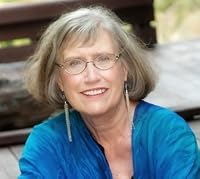
Author Interview - Yvonne Jones

at 7:45 AM 0 comments

Was it difficult to get “outside” your military life to see the things that you needed to address, that civilians don’t understand?

Not really. I knew what needed to be addressed in order to help our civilian families and friends understand our way of life a bit better. I mean, civilians more or less ask the same questions all the time, like “When are you going to move again?” and “Where are you going to move next?” So I knew I had to include something about the moving process and the assignment process, to help them see how things really work.

What WAS difficult, however, was to think of some issues that NEEDED to be addressed, but are never asked about by outsiders, simply because they don’t know about those differences. You can’t ask questions about something if you’re not even aware of its existence.

For example, in my book I write that it’s not very often that we’re asked to explain the DIFFERENCES between the military and the civilian lifestyles; and that this, in turn, might imply that civilians are simply not aware that there are distinctions between these two worlds.

Most people outside the military, for example, don’t realize that over the years we have created something that is referred to as a Military Culture, in which we share common beliefs and behaviors.

Another example of an issue that needed to be addressed, but is almost never asked about is the wellbeing of a military family AFTER the service member returns home from a deployment. Most assume that once the family is reunited, the hardest part of the deployment process is over; whereas in reality, those that actually HAVE experienced a deployment know that that’s the time where most problems for a military family begin.

These are all important issues, yet, they never get asked about simply because outsiders don’t know about their existence. And that’s where my book comes in. To draw attention to those problems and concerns, so that they can be discussed and talked about.

What part of military life is the hardest for civilians to grasp? How do you think your book helps?

The hardest part of military life for civilians to grasp is probably all the issues associated with our constant moving; you know, issues of constantly having to say goodbye to your friends, of having to find new friends, of having to get accustomed to a new home, of having to find and get used to new schools as a military child, of having to find a new job as a spouse. For most civilians, moving is exciting, simply because they don’t do it as often as we do. Therefore, they tend to project this excitement onto OUR moves, not realizing that it gets really, really exhausting after a while of having to start a new life every 2 years or so.

To help civilians understand us better regarding the constant moving, I dedicated an entire chapter to it in my book. It breaks the moving process into 4 parts: Assignment, PCS Orders (or Permanent Change of Station Orders), Outprocessing, and the Actual Physical Move. This chapter also talks about our more personal challenges, such as how we try to reconnect socially, and how doing so is easier for some than for others.

Another very important issue that is very hard for civilians to understand is that military families actually feel like they are missing out on their non-military family members sometimes. You know, the regular contact with our immediate families. Many civilians are very lucky in that they have their families around them, and with them, which enables them to be able to count on their immediate and extended families’ support at ANY given point in time. Military families want the same. We, too, want to be close and connected to our parents and siblings.

And that is why I wrote this book. I am hoping that by laying out what I have been feeling over the course of all those years, I was able to bring our way of life a bit closer to all our loved one.

What responses have you had from readers whose eyes were opened to the realities of military life?

I’ve had such wonderful responses so far. The book was published right after our last move here to Tampa, so I didn’t really know anybody here outside of the military. So, I met this wonderful civilian woman, who had just moved to Tampa herself. After she heard that I wrote a book about military life, she was very eager to read it and later stated that she was so glad she did, mainly because it addressed so many issues that she would have never thought to ask about. Through the reading she became aware of our differences as well as our similarities. I am really good friends with her now, and I truly believe it’s because of this book. It laid out our way of life in such a way, that she could better relate to me and my family.

Another example is this very beautiful email I received from an aunt of someone in the military. And she basically thanked me for opening her eyes to all the issues a military family goes through during a deployment. Most Americans DO realize to some extent how hard it is to be separated from your loved ones, but can’t truly comprehend the DAILY challenges a service member and his or her family has to go through for such prolonged periods of time.

Of course, I’ve also received some emails from readers that are either military spouses or in the military themselves. I’ve actually gotten a lot of responses from foreign-born military spouses and also military widows, thanking me for having included them in the book and drawing some attention to their specific issues they have to face in the military.

This book has been very well received so far. And I’m hoping I’m able to reach many more, because I truly believe that it can help in closing this gap that currently exists between our military and civilian worlds.

Whom have you approached about this book? How are you trying to spread your message/the message of the book?

Well, I approach anyone who’ll listen and anyone who believes IN and fights FOR the same causes as I do. I even got former U.S. Representative Ike Skelton listen to me on the phone for about 30 minutes. He stands for and supports the same cause. I truly, truly believe this subject matter to be so very important, to both Military Families as well as the American society as a whole, that we can’t afford not to try to open other people’s eyes about this issue. The American people need their military. But the Military also needs the American people.

Closing The Gap

For the first time, facts and common misconceptions about the Military Lifestyle have been accessibly presented and composed in a manner that specifically appeals to non-military friends and family members. This book is meant to apply to all families and friends of our service(wo)men of every branch within the military. It was written in order to make a positive difference by giving people within the civilian world the information they need to understand the experiences of and reconnect with those that protect their freedoms and rights. Stay close to your service members, for they truly need you.

Reviewed by “Circle of Moms” Top Military Bloggers:

“This resource is perfect for EVERYONE with ANY connection to the military community, and should be on everyone’s shelf!” – Judy Davis – TheDirectionDiva.com

“[This] book is absolutely brilliant!” – Cat Lang – NutsInANutshell.blogspot.com

Buy Now @ Amazon

Genre – Military Family

Rating – G

More details about the author

Connect with  Yvonne Jones on Facebook

Website http://www.understandingyourserviceman.com/

Author Interview – Michel Sauret

at 5:15 AM 0 comments

Do you recall how your interest in writing originated? In high school I had to pick an author for a book report, so I chose Stephen King, thinking he would be nice and easy since he’d already written so much. I selected his novella, “Rita Hayworth and Shawshank Redemption,” because I had watched the movie a dozen times. Heck, maybe I didn’t even need to read the story to write my report…

Except, after reading a few pages I became hooked. Reading that novella changed me. The characters, their motives and their pains all felt so alive.

Stephen King often gets pegged as a horror or genre author, but really, his characters are what make his stories.

Soon after that, I began writing short stories. I wanted to accomplish with words the type of feelings and connections I felt when reading King.

There was something really satisfying about writing short stories. You had to pack so much meaning, emotion and development is a short number of pages.

My early work was obviously really immature, since I was just 16, but it was a start. It propelled me forward to writing my first novel, “Breathing God” which was published by the time I was in college.

How long have you been writing? I started writing short stories when I was 16. My very first short story is called “The Follower” which is about a teenage boy driving his dad’s car after curfew and thinks he’s being followed by an undercover cop. Last year, I picked up the story and I almost laughed at how bad that original draft was. I ended up rewriting the whole thing and actually included it in my collection, Amidst Traffic, because even though there was still something raw and authentic I knew I could pull back from that piece.

What genre are you most comfortable writing? When I was young, I used to write a lot of horror or dark stories. I used to think that for a story to be good a life had to be at stake. But in college, at Pitt, I fell in love completely with contemporary literary fiction. To me, there is no greater genre. Literary authors are usually not your biggest money makers in the book market, but the genre is so authentic and inspiring that I couldn’t imagine myself writing anything else.

I do have a Christian novel lined up next, but I always make sure that the focus is on the characters and the prose first and the story grows out of that.

What inspired you to write your first book? My first book was actually an end-times type novel called “Breathing God.” I don’t promote it or sell it any more because I published it when I was young and my convictions have changed a lot since then and I think my writing style has grown a lot since. But I got a buzz out of writing the book. The idea came out of a simple question: What if God chose me to deliver a message to the world? What would it mean, and how would that feel? So I took that idea and I just ran with it.

What made you want to be a writer? The money. That was a joke. You can laugh now.

But in all honesty, writing fiction is a thrill because of the discovery process. I always discover something strange, new or unexpected about my characters while I’m in the midst of the story. Writing fiction is a wonderful way to battle thoughts of questions you have as a person. Mostly I’m driven by human conflicts and questions about our existence. I love that writing connects me with complete strangers through the veil of narrative.

Do you intend to make writing a career? I read a book by Noah Lukeman, who is a literary agent, and in one of his early chapters he stressed the fact that if you commit yourself to writing, you should project 20 years out before you can really expect to make it big. That’s a scary thought because we all want immediate results, and some of us want immediate fame or success. But the reality is that you can’t even collect retirement from most jobs after 20 years. When you put it in that perspective, that projection makes more sense.

Some authors make it big much faster, but for the rest of us we should cherish the idea that writing is work and it’s hard and that it requires commitment.

For now, I’m going to keep working full time for the Army, run my photography business and write and publish books on the side. By the time I retire from the Army, in 20 years, we’ll see if I’m in a place where I can earn a living from this. I personally believe my writing is good enough to invest my time into it, but the process can often really be a battle.

Buy Now @ Amazon

Genre – Short Stories / Literary Fiction

Rating – PG13

More details about the author & the book

Connect with Michel Sauret on Facebook & Twitter

Wednesday, October 2, 2013

#Free: Accountability Leadership @DiWorrall

at 1:30 PM 0 comments

http://www.orangeberrybooktours.com/wp-content/uploads/2013/09/Di-Worrall.jpg

Are You Still Living In Hope That Your Employees Will Follow Through On Expectations?

Ask anyone in charge of managing people to define their number one leadership challenge, and they’re likely to tell you that it’s achieving accountability for performance. CEOs, top executive teams, managers, and line supervisors all struggle to get the right things done, the right way, by the right staff, at the right time. When goals are met or exceeded, everyone’s a hero. But even the very best organisations face unforeseen challenges and sometimes fail to meet their goals. At such times the organisation must quickly be put on the right track, and this cannot be done without a strong culture of accountability.

Many organisations continue to implement traditional systems of accountability in an attempt to drive high performance in the workplace - only to see those efforts fail. The problem is, in many organisations accountability is viewed as something negative that happens to you when things go wrong. This kind of accountability never works over the long term. Real accountability is achieved through a step-by-step process that makes things go right.

Business leaders who employ the new principles of leadership accountability stand to multiply their chances of success and market leadership, reporting high performing characteristics such as:

· Cross-functional teams are the norm and are aligned, flexible, and adaptive to change.

· Delivering on or beyond expectations is the norm rather than the exception.

· Individuals and teams have a sense of ownership, and are focused, disciplined and collaborative, while holding each other accountable for outcomes.

· The din of organisational silence is replaced with communications which are engaging, high trust, and free flowing.

· Instead of entitlement, fear, blame and change resistance - organisational policies are driven by accountability, trust, and continuous improvement.

· Striving for excellence in customer service is embedded as a core business value.

· Company-wide culture embraces learning. It’s fun, friendly, and meaningful, and delivers great results.

The case for improved accountability in leadership has become critical for any leader with pragmatic desires for better business success.

In the #1 Amazon best seller, Accountability Leadership, you will find how great leaders are discovering a previously untapped goldmine of opportunity for personal, team and business transformation using the new science of accountability to build a high performance culture of accountability and responsibility.

Buy Now @ Amazon

Genre - Business, Leadership, Workplace Behaviour, Human Resources, Executive Coaching

Rating – PG

More details about the author

Connect with Di Worrall on Facebook & Twitter

Website http://www.diworrall.com.au/

Guest Post by Adele Park - Don't Surrender the Fate of Your Books to Publishing Executives

at 10:30 AM 0 comments

Have you unconsciously surrendered the fate of your novel to the whimsical tastes of publishing executives?  Do you think your book can't move forward without the financial blessing of others?  Agents and publishers can certainly boost our careers, but I'm not sure they can break them.  In all likelihood, our destiny lies in our own hands.  It took several years worth of groveling at the heels of those in the publishing industry for me to comprehend this.

Even though you've probably spent years visualizing the success of your book, how much time have you devoted to thinking about the specific things you want to achieve?  Perhaps you have a vague fantasy involving money and fame.  These things are definitely desirable, but chances are there's more to it than that.  The act of creation ignites something within us, even if we can't put our finger on it.  There's a lot to be said for fully experiencing the moment we are in.

Many of us hold our own dreams hostage by assuming things have to play out in a specific manner.  In my case, I wrongly believed the only way to turn my manuscript into an audio book was to first have it published in hard back.  Under this scenario, I would have had to sell a barn full of books before anyone would ever consider producing it in audio form.

Once I understood I had control over my own dreams, I formed an LLC called Straight to Audio Productions and produced my first audio book.  I recorded and edited an 8.5 hour project using nothing but a mic, a mixer and a laptop.  Miraculously, I was able to get my project listed for sale as an mp3 download on Audible.com.  After that, I built an actual studio and went to work recording Jitters-A Quirky Little Audio Book.  That project went on to win a 2011 Audie from the Audio Publishers Association in the multi-voiced category.     

If you are having trouble getting through to the top brass in the publishing industry, try to find the courage to publish your book anyway.  E-books and desktop publishing companies make this process inexpensive and easy to do.  Don't miss the chance to live your art just because things aren't happening exactly the way you had envisioned.  Outcomes are over-rated anyway.  The biggest thrills come from fully experiencing the projects you're passionate about.  Completing something you've been working on for a long time can be anti-climactic, so the trick is to enjoy the process.  Whatever you do, try not to get attached to the outcome.

When you run out of ideas, wing it.  I've met very few people who work in the audio book industry, so in my business I make everything up as I go.  Sure, I've taken a few wrong turns, but it's definitely been an interesting journey.  This lack of an industry blueprint has left me free to dabble with different ways to tell a story.  Unlike most audio books which have one person doing the voices for all the characters, my audio books feature full cast of actors who tell their stories directly to the listener.  I've also taken the liberty of experimenting with different forms of narration.  Since the lead character in Jitters is a radio shock jock, I thought it would be interesting to narrate the story through a series of newscasts.  With Yikes! Another Quirky Audio Book, I used a series of narration pieces called “Examine Our Navel.”  Like it or not, I probably couldn't float this idea to any traditionalists in the audio book industry.

It might seem risky, but there are advantages to “going rogue.”  For one thing, you don't have to follow any rules.  Don't be afraid to explore the unknown.  Some of the best stuff comes from impromptu moments.

I'm sure we would all love to spend a few days in the Gucci shoes of the publishing industry elite, but let's not assume this group has it better than we do.  Along with the perks comes more pressure.  Rather than focusing on what our project lacks, perhaps our energy would best be spent being grateful for what we already have.  Besides, there's no telling where our books will end up – not knowing is half the fun!

Buy Now @ Audible
Genre - Comedy / Satire
Rating – R (language & theme)
More details about the book
Connect with Adele Park on Facebook

Tuesday, October 1, 2013

Author Interview – Meg Benjamin

at 4:00 AM 0 comments

What’s your favorite meal?

I love to cook and in the summer I love to make salads. My favorite meal is a “throw everything in there” kind of salad I’ve been making for years. It’s not something I could every write a recipe for because it depends on what’s in season and on hand. Right now, for example, I’ve got lots of tomatoes from my garden. I’ll also throw in an avocado or two, and lots of lettuce (although my garden lettuce is beginning to bolt). A can of garbanzos will help, and so will some salad shrimp. Then there’s whatever I managed to find at the farmer’s market this week—lemon cucumbers, watermelon radishes, carrots of various hues, even lion’s head mushrooms. Toss it together with some yummy olive oil and maybe some flavored balsamic and you’ve got a great meal!

What movie do you love to watch?

As a thorough-going romantic, I have to admit that I love Casablanca. My romance-writing friends have told me repeatedly that it’s not a romance since it doesn’t have a happy ending, but I’m not sure I agree. Rick and Ilsa can’t end up together without destroying Ilsa’s marriage, and Ilsa’s marriage to Viktor is important. Rick and Louis heading off to fight the Nazis isn’t exactly an unhappy ending. And before that happens you have all that wonderful dialogue (“I came to Casablanca for the waters.” “There are no waters in Casablanca. We’re in the desert.” “I was misinformed.”). It’s just a marvelous movie.

Is there anyone you’d like to acknowledge and thank for their support?

I wouldn’t be published or writing happily without the Romance Writers of America. More specifically, I wouldn’t be published without the San Antonio Romance Authors (SARA), the San Antonio branch of RWA. When you’re first starting out, I think it’s crucial to have support. You need people to read your stuff and give you reactions, and you need people to hold your hand when you feel crushed. Most important of all, perhaps, you need people who are going through the same trials you’re going through. It helps not to feel alone, and it really helps to see that there’s actually light at the end of the tunnel. At SARA I had the example of some excellent writers—Desiree Holt, Delilah Devlin, and Cerise DeLand among others. They helped me see what you could do if you just kept at it.

What other jobs have you had in your life?

Before I began to write full time, I taught English and Communication at a Prominent University in San Antonio. In fact, my specialty was technical and science writing, about as far from fiction as you can get. I also taught Web design and copyediting, along with a class in the basics of page layout. The copyediting was a lot of fun, actually. It grew out of my moonlighting job as copyeditor for an underwater photography magazine. Although I learned a lot about scuba diving in that job, I learned even more about commas!

Do you find the time to read?

Yes I do, even if I have to do it when I’m on the treadmill! I think all writers need to read while they’re writing. Reading sort of “primes the pump” for writing, at least as far as I’m concerned—they both come from the same creative part of your brain. I don’t usually read the same kind of thing I write. So, for example, I like to read historicals and regencies while I’m working on contemporary stories and mysteries while I’m doing paranormals. But my own words seem to flow more easily when I’m reading someone else’s.

Medium Rare

Buy Now @ Amazon @ Barnes & Noble

Genre – Paranormal

Rating – R

More details about the author and the book

Connect with  Meg Benjamin on Facebook & Twitter

Website http://www.megbenjamin.com/

Author Interview – James Fricton

at 4:00 AM 0 comments

Words

Before I start writing every day, I read every section of the newspaper. The Star Tribune and New York Times has great articles and editorials. I have enjoyed reading scientific articles as well as creative fiction and some non-fiction. The recent fiction authors who synchronize with me include at least Dan Brown, Vince Flynn, John Grisham, and Maeve Binchy. I also have really enjoyed Jon Krakauer’s non-fiction books and many of the classic books over the years. The Heart is a Lonely Hunter by Carson McCullers grabs me.

Energy

I use all seven Realms as source of energy to get my mind focused on the task at hand. The best activity for driving my creative energy is exercise. I go through my yoga routine, then a fast twenty-minute brisk walk/run, and follow up with a fast bike ride. In summer months, the inspiration comes from walking or biking through parks, lakes, and neighborhoods of Minneapolis with my wife or friends. In the Way of Life Realm, I eat a mostly natural diet— vegetables, fruits, cheese, nuts, yogurt, and granola. I do eat some meats but mainly poultry and fish. In the Mind Realm, I like to read the news and learn something new each day. In the Emotional Realm, I am creative through writing, drawing, stain-glass, cards, painting— whatever I have time to do. In the Nature Realm, I like being outside but this is more difficult. I try to stay organized but this is one of my weaker Realms. In the People Realm, I love helping patients sort out the cause of their pain and providing lasting solutions. In my Spiritual Realm, I become introspective easily through meditation. I am in love with life. What a gift God has given us.

Temptation

I am fortunate that my life is filled with many blessings that come with a wonderful family, friends, and patients. Thus, finding a few minutes of quiet time to write is the biggest challenge. I enjoy being with people and writing is a lonely proposition. My biggest temptation is in the food arena. Despite my focus on natural foods, I eat Life cereal everyday. Maybe, it’s the oats or the name or the habit, but I love it. I do not know much about procrastination in writing. I have the opposite problem. Too much on my mind to write and not enough time to put it all down. I like writing. It’s creative and gives me energy.  I feel much better when I’ve done a full day’s work and concentrated well.

last-scroll-novel-james-fricton-hardcover-cover-art

Buy Now @ Amazon

Genre - Romantic Thriller

Rating – PG13

More details about the author

Connect with James Fricton on Facebook & Twitter

The Magistrate (The Prisonworld Trilogy) by Keira Michelle Telford

at 1:15 AM 0 comments

clip_image001

« P »

clip_image002

Five years ago …

An explosion shakes the ground and sends a plume of thick black smoke up into the air, a raging ball of fire beneath it. Debris is thrown up and comes crashing back down to earth: bits of stone and brick, chunks of twisted metal, and scraps of human flesh.

The entire western elevation of Hamilton House—an imposing Victorian building located on the Victoria Embankment in the EC4 zone of London, right at the edge of the Square Mile—is destroyed, leaving a gaping, fiery hole from which the screams of the injured echo into the deserted Inner Temple Gardens beside it.

After the blast, and the brief moment of hollow silence following it, the normally tranquil area around Victoria Embankment is flooded with noise.

Sirens.

Fire.

Police.

Medics.

In the coming hours, the news will report that the Home Secretary is dead, along with several senior Section Five officers. Many more people—other Section Five officers included—were injured, and the first to be dragged from the wreckage by a couple of passing pedestrians is a forty-odd-year-old man. His shoulder-length light brown hair, which is normally pulled back into a neat ponytail, is bedraggled and scruffy. Dressed like a proper gentleman—in other words, a toff—he’s wearing an expensive suit, complete with waistcoat and silk puff tie.

His tweed flat cap falls off, getting trampled on as the two conscientious humanitarians pull him across Inner Temple Gardens and lie him down on the soft green grass away from the fire and the smoke, helping him to breathe.

The Magistrate

Buy Now @ Amazon

Genre - Lesbian Romance/ Dystopian/ Neo-Victorian

Rating – R (18+)

More details about the author & the book

Connect with Keira Michelle Telford on Facebook & Twitter

Website http://www.ellacross.com/


Top Shelf Books Copyright © 2010 Designed by Ipietoon Blogger Template Sponsored by Online Shop Vector by Artshare